One-stop Bending Solutions For Wires, Tubes And Pipes
One-stop Bending Solutions For Wires, Tubes And Pipes
I. Types of Automatic Pipe Bending Machines
II. How to Choose the Right Automatic Pipe Bending Machine
III. How to Inspect an Automatic Pipe Bending Machine After Purchase
IV. Automatic Pipe Bending Machine Purchasing Process
V. How to Evaluate Pipe Bending Machine Manufacturers
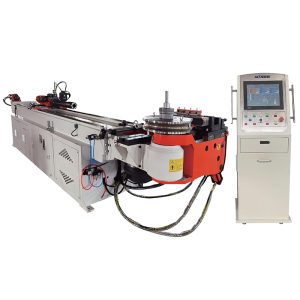
Do you know how to safely and correctly purchase an automatic pipe bending machine? This article will guide you. If you can’t find the pipe bending machine model you want, feel free to contact us for consultation.
I. Types of Pipe Bending with Automatic Pipe Bending Machines
Automatic pipe bending machines, while called “pipe bending machines,” can also bend I-beams, channel steel, angle iron, wire rod, etc.; they can also roll coiled pipes, U-shaped pipes, half-pipes, and coiled tubes, etc.
There are two methods of pipe bending:
1. Cold bending, with models including hydraulic pipe bending machines, electric pipe bending machines, and three-roller bending machines;
2. Hot bending, with the medium-frequency pipe bending machine as a representative model.
Businesses purchase automatic pipe bending machines to reduce labor intensity, increase production efficiency, improve product quality, and thus enhance their competitiveness. Savvy business owners will choose the model most suitable for their production needs (the most suitable is the best).
So, what kind of automatic pipe bending machine is most suitable for your production needs?
II. How to Choose a Suitable Automatic Pipe Bending Machine
First, determine the pipe diameter range to bend based on actual production needs. Some hardware processing plants require pipe bending machines for various pipe fittings. However, no single pipe bending machine is universally applicable; each has its own parameters limiting its bending capacity. For example, the DW38NC hydraulic pipe bending machine can bend a maximum pipe diameter of 38.1mm x 2.0mm (based on A3 material), and a minimum diameter of 11.4mm (wall thickness varies depending on the material); the 114 type flat pipe bending machine can bend a maximum pipe diameter of 114.3mm, and a minimum diameter of 45.72mm!
Furthermore, the price of each model of automatic pipe bending machine varies. Choosing an overly large model is wasteful; choosing an undersized model will result in a “small horse pulling a large cart” effect, hindering the machine’s lifespan! Secondly, the bending parameters of the largest pipe fitting within the bending range must be determined, including:
1. Pipe material (steel pipe, stainless steel pipe, aluminum pipe, etc.);
2. Pipe cross-section (round pipe, square pipe, angle iron, etc.);
3. Pipe outer diameter;
4. Pipe wall thickness;
5. Bending radius (to the pipe’s median diameter).
III. How to Inspect an Automatic Pipe Bending Machine After Purchase
1. First, inspect the performance of the pipe bending machine, including the reliability of various limit switches, interlocks, overload protection devices, and emergency stop buttons; inspect the flexibility and reliability of various operating procedures such as clamping blocks, clamping and releasing mechanisms, arm rotation, and mandrel forward and backward movement; inspect the flexibility of each adjustment device; inspect the completeness of the electrical system, and inspect the flexibility and reliability of auxiliary devices.
2. Second, inspect the assembly quality of the pipe bending machine. Conduct a no-load test on each machine for at least four hours. The test time for each sub-procedure should not be less than one and a half hours. Operation must strictly adhere to the work procedures specified in the installation design.
3. Then, check the noise level of the pipe bending machine. Noise is inevitable after each machine is turned on. Check whether the noise level meets the regulations.
4. Finally, inspect the outer surface of the pipe bending machine. The surface should be free of protrusions, roughness, unevenness, and dents. Joints should be smooth. Exposed mating surfaces should not be misaligned, and obvious exposed surfaces should not have dents, scratches, or corrosion. Each machine must undergo rigorous factory inspection by the inspection department before it can leave the factory.
IV. Automatic Pipe Bending Machine Procurement Process
1. Select Machine
2. Contact Seller
3. On-site Inspection
4. Confirm Payment
5. Manufacturer Ships Shipment
6. Confirm Receipt, Manufacturer Provides Instructions on Machine Usage
V. How to Evaluate a Pipe Bending Machine Manufacturer
1. Check if the business license includes the word “production”. If not, it indicates a lack of production qualifications, which means product quality cannot be guaranteed. The registered capital on the business license also reflects the manufacturer’s strength. Additionally, check if the products are insured by insurance companies and whether they possess patented technology and products.
2. Check the company’s establishment date.
3. Inspect the factory and equipment.
4. Check the number of employees.
5. Assess R&D capabilities.
Our website features many different pipe bending machine models. If you are unsure about the model you need, please feel free to contact us. We will provide you with professional assistance.
Learn More:
High-quality fully automatic pipe bending machine
What are the advantages of CNC wire forming machine?
Factors affecting bending during CNC pipe bending machine processing
Our equipment has CE, ISO quality inspection certificate, so the quality is guaranteed to be cost-effective. According to different processing requirements, machines can be customized to fit for your usage, to provide customized services. In the processing period, we strictly control the production process, to ensure the quality of clearance, standardize the process, strict implementation.

